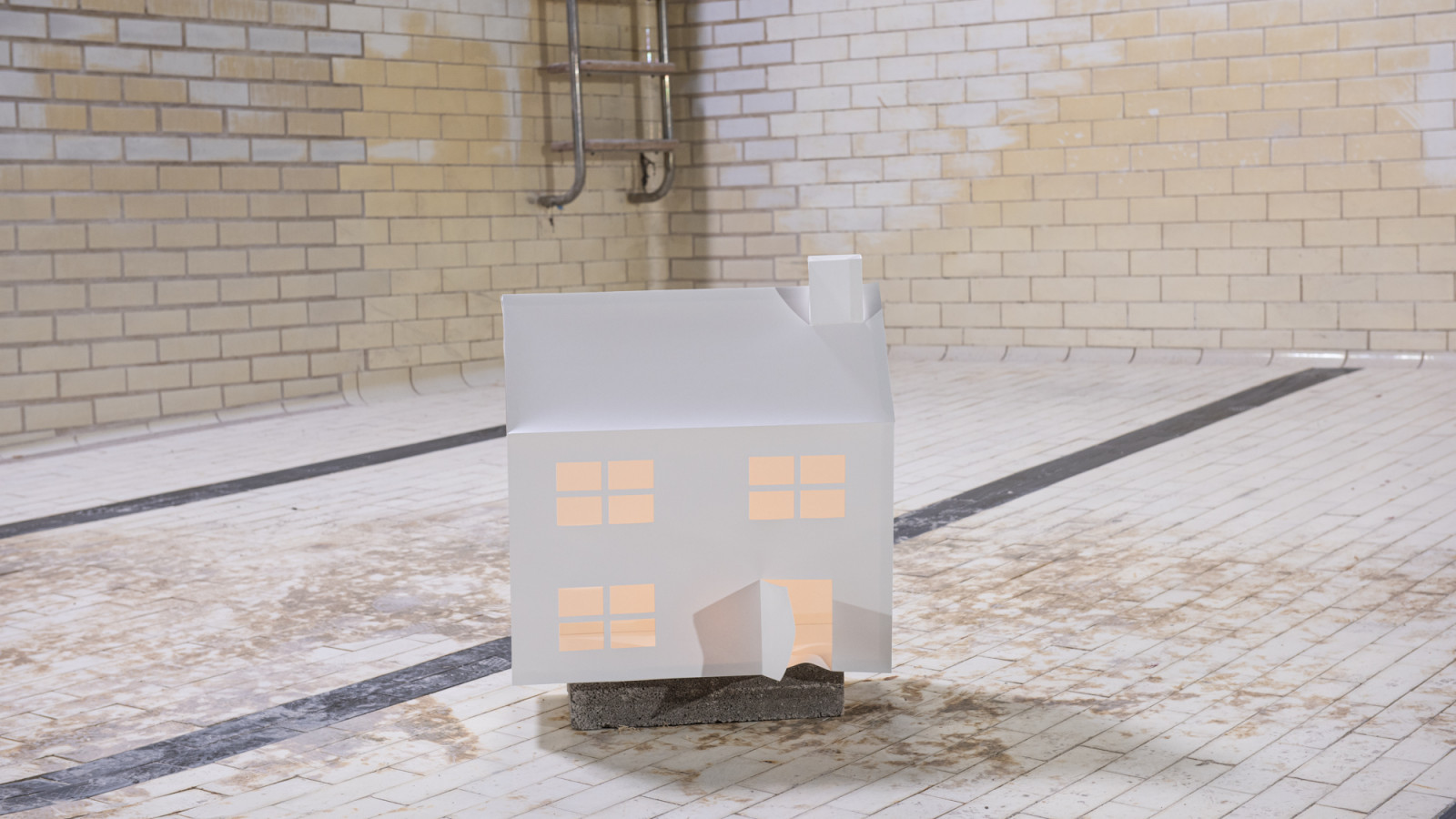
Close to Home explores themes of suicide, bereavement, loss, care and connection. There are no depictions of suicide within the installation, and there’s no graphic content. Please note that the work is personal and emotional.
The work has been made over eight years in close collaboration with people who have lived and living experience of suicide and bereavement. The way it is shown - and the support around it - has been shaped both with some of those participants, and with specialist advisors.
You can leave Close To Home at any point, and you don’t have to view all of the work. You are also welcome to return during opening times.
Hosts are there throughout if you’d like to talk, and there’s a quiet space to use whenever you need it.
Details of support organisations are available in the space and at the links below:
- Kind to Your Mind Liverpool – Local wellbeing, mental health and suicide prevention support.
- Hub of Hope – Find local and national mental health support services
- SOBS – Support for adults bereaved by suicide.
- Alfie's Squad – Support for children and young people bereaved by suicide or sudden loss.
If you are struggling, you can call Samaritans free, day or night, on 116 123.
You can find out more about the larger work, of which Close to Home is part, here: The Suicide Chronicles.
Audio Resources
- Close to Home: Introductory Text - An audio version of the introductory text for the installation
- The Suicide Chronicles: Conversations - Recorded conversations reflecting upon the processes and journeys behind the Chronicles.
Getting Here
Close to Home is in the Arrivals Hall of the Cunard Building, Water Street, Liverpool L3 1DS. The building sits on the waterfront at Pier Head, directly opposite the Mersey Ferry terminal. The nearest train stations are James Street (around 5 minutes’ walk) and Moorfields - both stations have full step-free access (Category A) to all platforms (please note, Moorfields is only accsible through the main Moorfields entrance, The Old Hall Street entrance involves stairs and has no accessible access. Buses run to Liverpool ONE bus station nearby. There is no public parking at the building itself; the nearest accessible parking bays are on Mann Island, a short, level walk away, with further car parks across the waterfront.
Stepped access directly into Close to Home is from the front of the building, facing the Strand. There is handrail leading up the three flights of stone steps to the main entrance.
Step-free access is around the side of the building, facing the Port of Liverpool Building. If you need any accessing entering the building, please contact our team on 07421 455596.
You might want to check our visual story to help in planning your visit. Please click the link here to access - Visual Story.
Opening Hours
Close To Home is open Tuesday, Wednesday and Friday 11am-5pm, and Saturday 12–6pm. Entry is free, and you don’t need to book. We are closed on Sundays and Mondays, and only open for events and group bookings on Thursdays. The installation is open from Saturday 5th September to Saturday 10th October.
If you are coming with a large group, we ask you to book in advance by emailing projects@heartofglass.org.uk directly, please letting us know of any access considerations.
Close To Home is free to enter.
Inside The Space
On arrival, you’ll be welcomed by a member of the team, and you’ll find Hosts throughout the space for the whole of your visit. You can spot us by our ‘Host’ badges and blue bags. Please come and find any of us if you have a question.
Close to Home is a multimedia installation which contains photographic prints, art objects, audiovisual installations, and a design consisting of large runs of white muslin throughout the space. There’s no set route and no right way through.
You’re welcome to wander, to stop where something holds your attention, and to spend as much or as little time with each work as you wish. Seating and quieter areas are available throughout, and you can pause, rest, step out of the space and come back.
The Arrivals Hall has a good deal of natural light from its large windows, which changes through the day alongside the installation’s own lighting. If bright or changing light affects you, it may be worth choosing your time to visit. Our team can help you find the calmer corners of the space.
There’s somewhere to leave coats and bags on arrival, some basic refreshments are available free of charge, and there’s a quieter space to decompress if you’d like a moment before you leave, or during your visit.
To protect the intimacy of the space and everyone’s privacy, we ask that you don’t take photographs or make phone calls inside the installation.
Deaf and Hard-of-Hearing Visitors
There is a filmed BSL version of the Host’s welcome. This will be on a screen, and our team will point it out as part of the welcome.
The film works are shown predominantly on headphones, and all of the film works include descriptive subtitles. There is one audio-only piece that has a written transcript available.
Blind and Partially Sighted Visitors
Guide dogs are very welcome.
The space is on one level and can be moved through with a sighted guide. Our team are happy to help you get your bearings and move through the work at your own pace - just let a Host know. Our Hosts have also been briefed on the basics of sighted guiding using resources from RNIB.
There is an audio version of the Close To Home introductory text available here - Close To Home Introductory Text.
If a detailed description of the space would help you plan your visit, please get in touch before you come, and we’ll do what we can to support you.
Step-free Access
The direct entrance to the installation is up three flights of large stone stairs, but there is step-free access into the building via Reception.
Step-free access is around the side of the building, facing the Port of Liverpool Building on Brunswick Street. To access step-free, you will need to ring the buzzer to be let in. This takes you to a lift which brings you to a gated reception. The Cunard receptionists are happy to show you to the installation hall and alert a Host. If you are visiting with someone who can use stepped access, they can alert the welcome Host, and we will come down to walk you through. The whole installation is on one level, with no steps inside the space.
Toilets
There are toilets - including an accessible toilet, gender neutral toilet and baby change facilities - available during your visit; our team can direct you. The nearest Changing Places toilet to the Cunard Building is located at the Museum of Liverpool, 0.4 miles (approx. 8-min walk) away at the Pier Head.
Sensory Comfort
The space has been designed to be as neurodivergent-friendly as we can make it, with quieter corners, variable lighting and plenty of places to sit on different sorts of surfaces. You’re free to skip anything, step out at any point, and return when you’re ready. You’re also very welcome to bring any sensory or comfort items that help you feel at ease. Our Hosts have been briefed on stimming and sensory-seeking behaviours, and also have ear defenders should that make your visit more comfortable.
There is a floorplan of the space to help you navigate the works and locate exits and rest points. You might want to look at our visual story.
Flexible Visiting
Alongside our regular opening hours, we’re holding some early-morning and late-night openings throughout the run to allow for quieter or more flexible visits:
- Thursday 17 September, 9pm–11pm
- Thursday 24 September, 8am–11am
- Tuesday 29 September, open until 8pm
- Wednesday 7 October, open until 8pm
If you’d like to visit outside the advertised hours, please get in touch, and we’ll try our best to accommodate you.