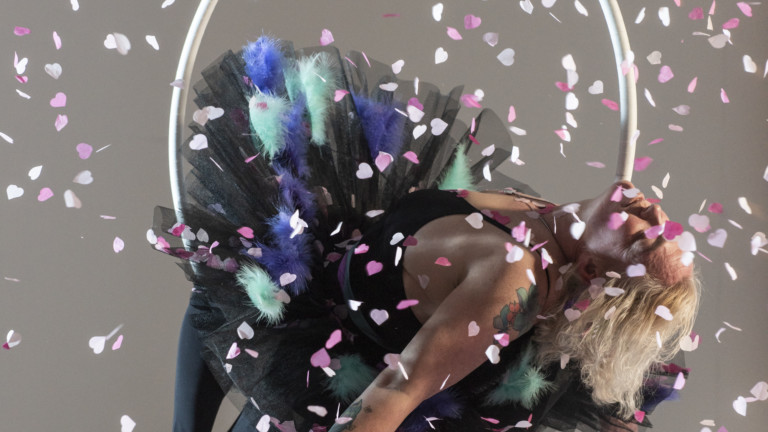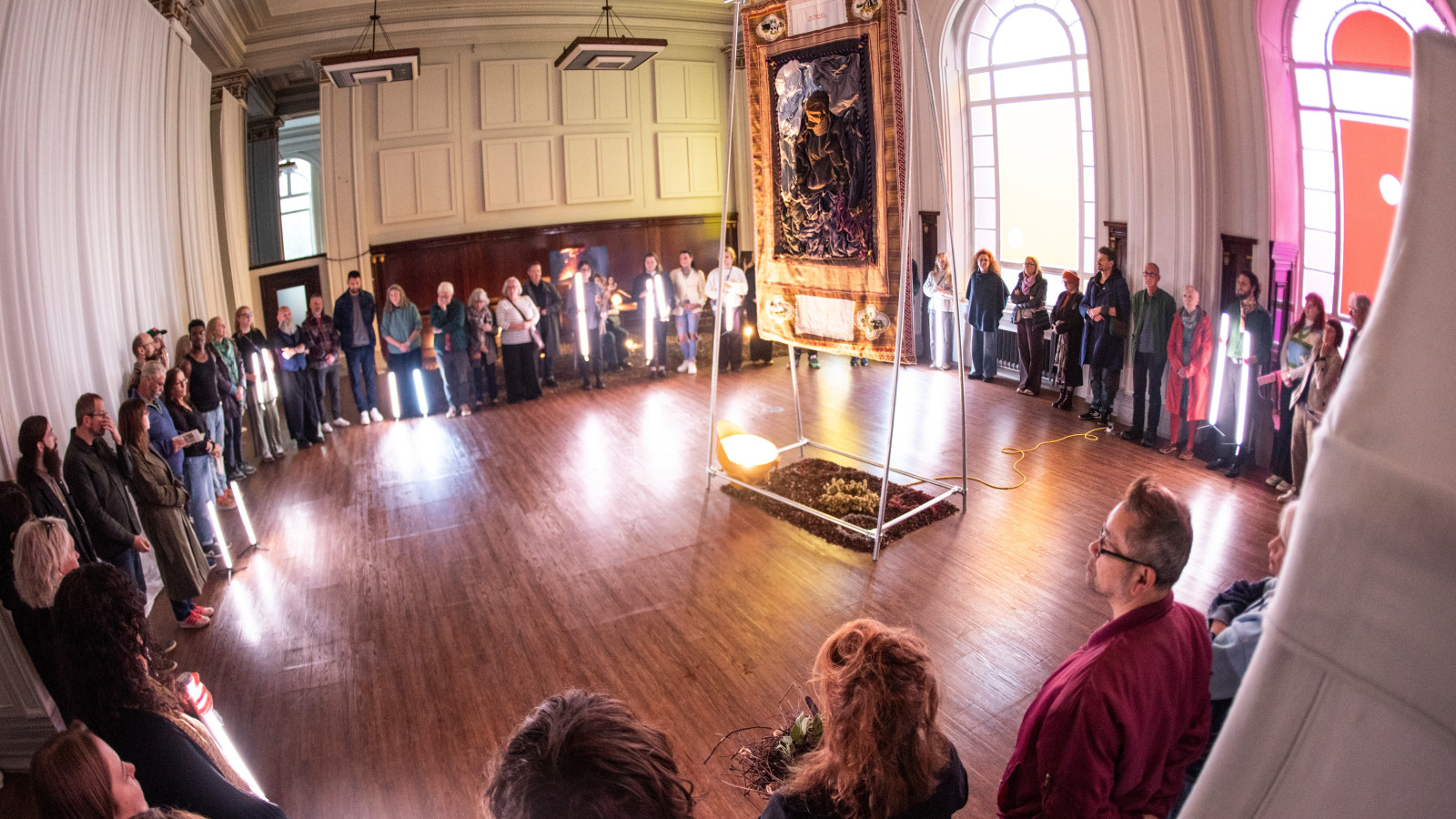
As an organisation, it has been an honour to open Close To Home up to the world within Liverpool’s historic Cunard Building this year. A culmination of almost a decade's worth of work between Heart of Glass, artist Mark Storor and communities across England, Wales and Ireland bereaved by suicide, our most ambitious project has also been one of our most intensely rewarding and engrossing ones.
Now, as the weeks have passed since Close To Home closed its doors to the public for the final time, we’re reflecting on the experiences it created and the people who helped make them possible.
We're beyond grateful to all of the hosts of Close To Home, individuals who spent the most time with the work and whose presence and care helped shape the experience for so many visitors. Here, they share what the experience meant to them.
Kez
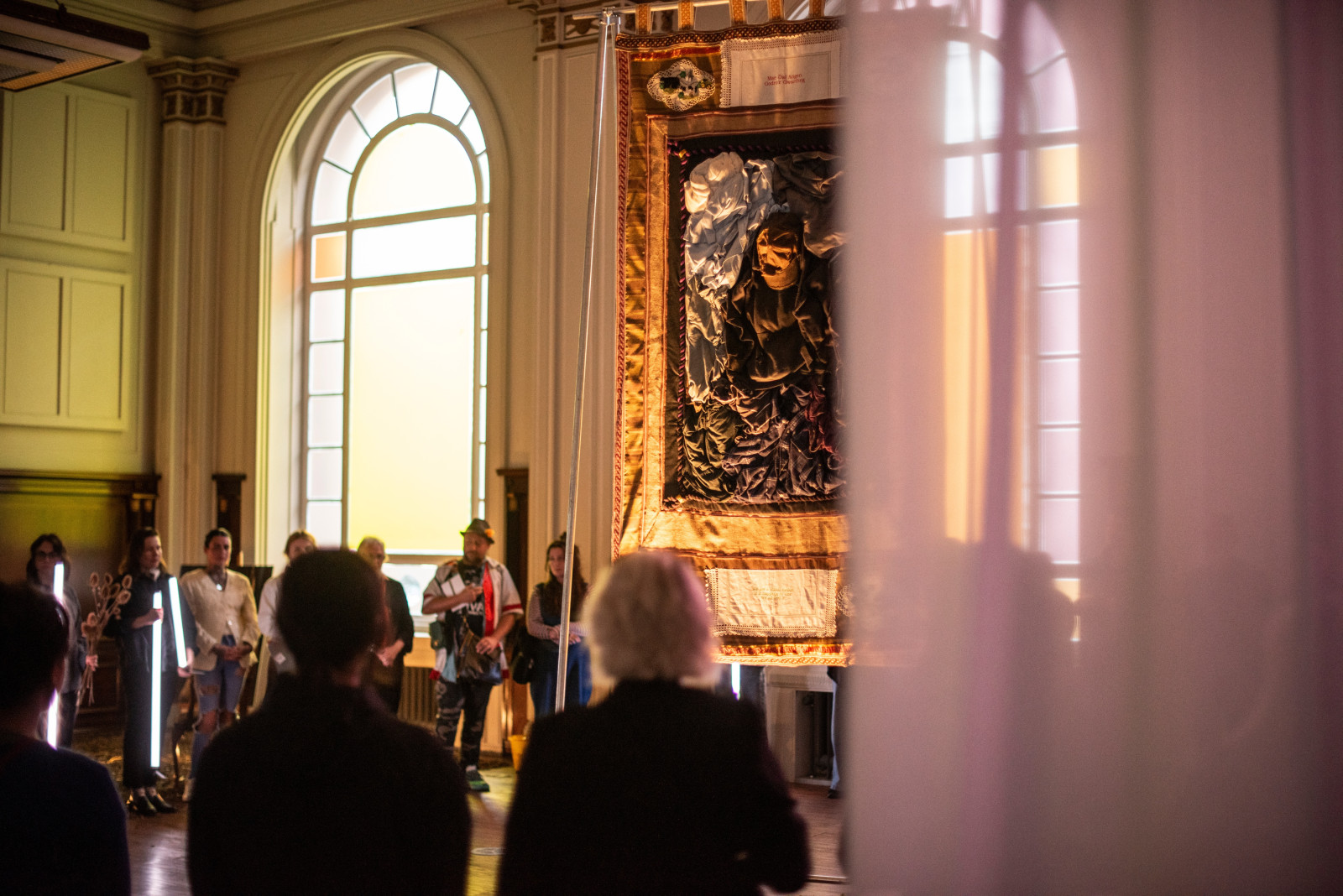
"As summer moved into autumn, I spent my days as a host within the Arrivals Hall at the Cunard Building, wandering through the Suicide Chronicles that made up Close To Home. There are few spaces in Liverpool that gently transport you out of the urgency of the city. Here, I am held within a dream-like space draped with white gauze, and trusted to, in turn, hold others with the same care.
Like grief, Close To Home is a shapeshifter. We welcomed visitors through the threshold into the space, to find their own journey through the installation. Some found hauntings of experiences or relics from their lives morphing out of the work.
Mark spoke of how the sonic landscape from Chronicle 4 acts like lungs for the installation. In the mornings, the installation was taking its first breaths, inhaling the chill from the River Mersey and exhaling the energy that clung from yesterday. The soundtrack for Chronicle 4 would begin and fill the grand space. I imagine each Chronicle as an individual body part, with Chronicle Six being the feet that connect us with the earth and Chronicle One as my cranium. Whilst every organ or cell has its own role, life and complexities, it exists in harmonious relationship to the whole.
Across each Chronicle, participants performed a series of gestures. In the lounge, I would hand cups of tea to visitors as they described and envisioned the cathartic freedom that these actions could offer. Together, we would watch as the work shifted and blurred with how their own lives have been impacted by bereavement. Not only are the foundations of this project formed through trust between Mark and the participants, but also through the trust extended consistently between visitors and us as hosts.
Art operates in this sweet spot, to give form to and communicate experiences that are often hard to verbalise or articulate. Punctuated with sips of tea and sighs of relief, we would question together how we care for one another, in our communities, but also how society’s systems operate to support us all in the face of the hostility of our society, through neoliberalism and capitalism. Finally, as the cup is finished, we find resilience within our empathy for each other."
Brendan
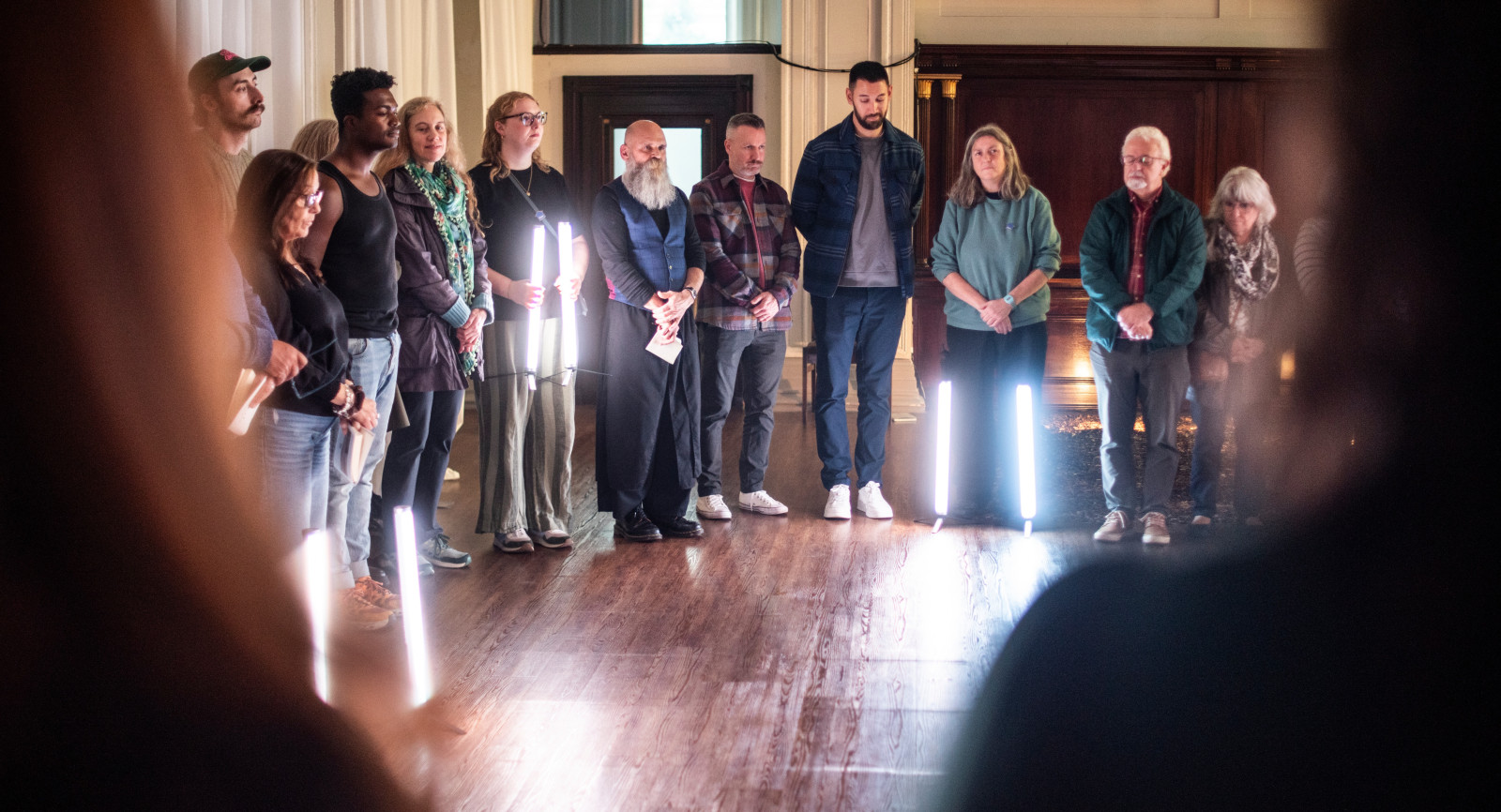
"As a fledgling death worker, I feel immensely grateful to have been part of Close To Home. As a host, I was well-trained and proud to bear witness to the sensitively curated stories, memories and art in the exhibition, which enabled many precious, deep and vulnerable conversations during and after the show.
Collectively, we need to outgrow the stigma around suicide. It soon became clear that almost everyone attending or involved had been in some way touched by the subject matter. Many shared how 'we need more spaces like this', which I took to mean: sober, accessible, free to attend, ambitious public art, but also places where people felt held and supported enough to share and begin to process long-held grief outside of clinical settings or dysfunctional family systems.
Phrases like 'trauma-informed' and 'care-led' are often deployed in the arts, but it's so rare to see such a high level of care, support and intention effectively demonstrated in every layer of this eight-year project. I hope Close To Home receives the attention, funding and support it deserves and continues to encourage others to be brave, caring and look at the places that scare us, especially over a cup of tea."
Martyna
"I hadn’t fully understood how different being a host for Close To Home would be from standard gallery invigilation. Just a few minutes after opening, having witnessed the visitors’ reactions, I began to understand how important my role was in tending to the space, the artwork and the visitors’ experience.
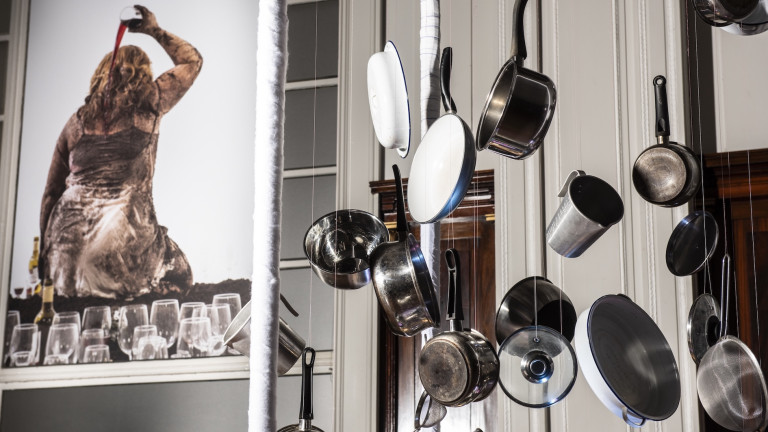
Chronicle Seven, which housed all of the previous Suicide Chronicles, carved out a space for meditation on some of life’s most difficult questions on the experiences of grief, bereavement and suicide.
Placing the work in such a busy spot in the city, like the Cunard Building, was an excellent choice. The artwork often welcomed tourists, passers-by and workers who, while travelling to completely different destinations, decided to spend two to three hours exploring the installation created by Mark and the communities.
I had the great pleasure of listening to their interpretations of the films, photographs, sculptures and sound pieces. It felt to me like many of the people visiting the installation felt that their own experiences of pain or grief had been in some way captured in those stories.
I found these conversations deeply fulfilling, and they expanded my idea of how profoundly art can affect people’s lives."
Ami
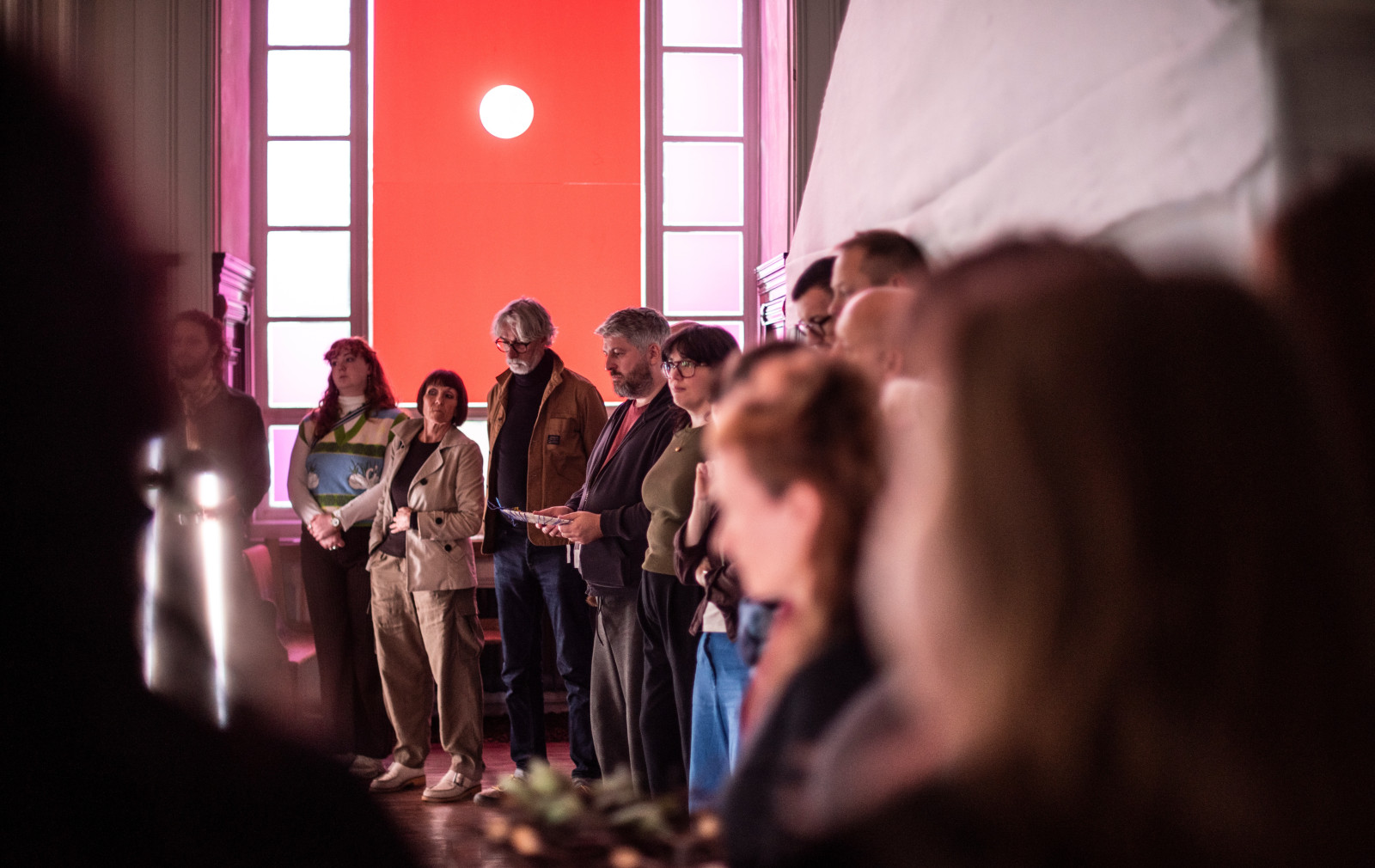
"There were different ways in which visitors engaged with the work. In Chronicle 2, people were observed walking around the space, reading the messages on the blue shirts before picking up the headphones and sitting down. In Chronicle 4, visitors often bent over the white benches to read the poem. Some picked it up, while most chose to lean over and read the text where it was placed.
The feathers also provided a gentle point of entry for visitors. Some took a moment to pause and reflect before deciding to continue through the exhibition. Others arrived in small groups, sometimes quite naturally gathering around the feathers at the same time.There were a number of repeat visitors across the six weeks. Some returned with new companions, introducing them to the hosts and sharing the experience with them. Visitors seemed happy when recognised and welcomed back, and there was a lovely sense of familiarity developing between guests and the hosting team.
Throughout, there was a real sense that people were taking their time with the exhibition and engaging with it in their own way. Some were more talkative and curious, while others preferred to move quietly through the spaces. During circle time, hosts often shared how lovely the days had been, particularly the quieter moments of reflection.
There were nothing but kind words spoken about Mark (Storor, the artist). Guests seemed particularly comfortable opening up to him and often wanted to share their experiences. It meant a lot to them to have someone listen and give them the opportunity to get their stories off their chest."
 Thought

 Free